More Than Just Heat Management
Understanding the Fundamental Difference
When evaluating LED display technologies, discussions often focus on image quality, brightness, refresh rate, and energy consumption.
One technical aspect that significantly impacts display performance is the power supply architecture used inside the LED module.
The two most common approaches are:
- Common Anode
- Common Cathode
While many people associate Common Cathode technology primarily with lower heat generation, the differences extend much further, affecting energy efficiency, color performance, reliability, and long-term operating costs.
What Is a Common Anode LED Display?
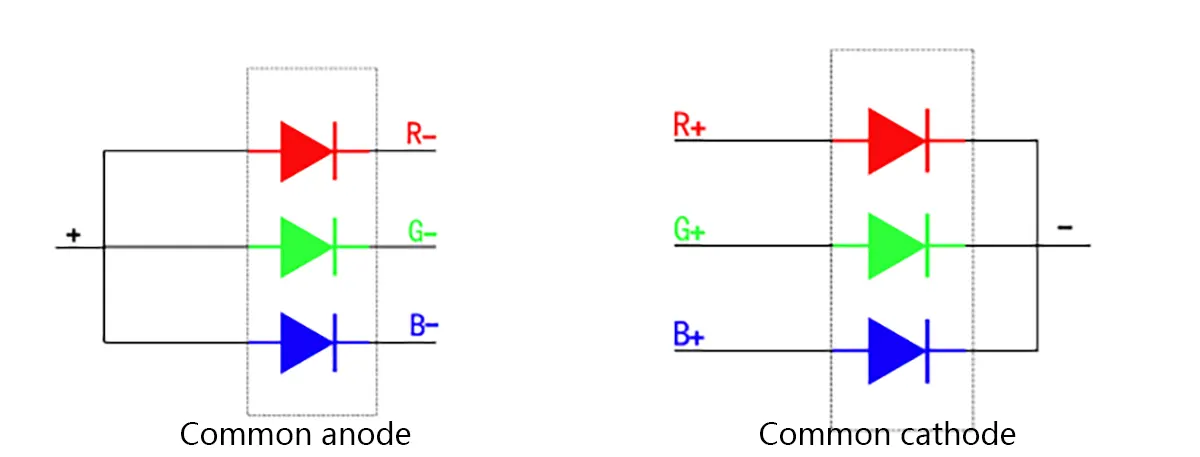
In a Common Anode design, all red, green, and blue LEDs share a common positive voltage supply, typically 5V.
The driver IC controls each LED channel by switching the negative side of the circuit.
This architecture has been widely adopted in the LED industry due to its simpler circuit design and lower manufacturing cost.
What Is a Common Cathode LED Display?
In a Common Cathode design, all LEDs share a common ground (0V).
Each color channel receives an independent voltage supply optimized for its operating requirements.
Because each color receives only the voltage it actually needs, energy losses can be significantly reduced.
Contact Us to Discuss Your Project Today
Energy Efficiency and Heat Generation
Why Common Cathode Consumes Less Power
The most noticeable advantage of Common Cathode technology is improved energy efficiency.
Common Anode Example
A common anode system typically uses a fixed 5V supply.
However:
- Red LEDs only require about 2V
- Green LEDs require around 3V
- Blue LEDs require around 3V
The excess voltage must be dissipated through driver circuitry.
This wasted energy becomes heat.
Common Cathode Example
Each LED color receives only the voltage it requires.
| Color | Required Voltage |
|---|---|
| Red | ~2.0V |
| Green | ~3.0V |
| Blue | ~3.0V |
Because there is very little excess voltage, power loss is significantly reduced.
Benefits include:
✓ Lower power consumption
✓ Reduced heat generation
✓ Improved energy efficiency
✓ Lower operating costs
Color Performance and Image Quality
Better Low-Brightness Performance
Another advantage often overlooked is color stability at low brightness levels.
In Common Anode systems, excess voltage on red LEDs can sometimes cause:
- Minor color shifts
- Reduced grayscale accuracy
- Less stable low-brightness performance
Common Cathode systems provide more precise voltage control for each LED color.
Benefits include:
✓ More accurate color reproduction
✓ Better grayscale performance
✓ Improved low-brightness image quality
✓ More consistent white balance
This is particularly important for:
- Broadcast studios
- Control rooms
- Corporate meeting rooms
- Fine-pitch LED displays
Calibration Benefits
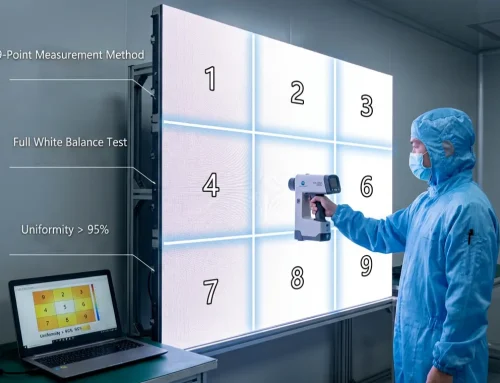
Many Common Anode displays require additional calibration to compensate for color inconsistencies.
Because Common Cathode technology inherently provides more stable electrical characteristics, it can often achieve better color consistency with less correction.
Advantages include:
- Reduced calibration workload
- Improved long-term consistency
- Lower maintenance requirements
Cost and Maintenance Considerations
Why Common Anode Remains Popular
Despite its advantages, Common Cathode technology is not always the best choice.
Common Anode Advantages
- Simpler circuit design
- Lower manufacturing cost
- Single power supply architecture
- Easier maintenance
- Widely available components
For cost-sensitive projects, Common Anode remains a practical solution.
Common Cathode Challenges
Common Cathode systems require:
- Multiple voltage rails
- More sophisticated power management
- Higher design complexity
- Specialized driver circuitry
This results in:
- Higher manufacturing costs
- More complex engineering
- Increased development requirements
Power Distribution Considerations
Because Common Cathode systems use lower operating voltages, power distribution design becomes more critical.
Key factors include:
- Cable length
- Voltage drop
- Power supply placement
- Current distribution
Improper power distribution can negatively affect performance.
Therefore, Common Cathode displays typically require more careful electrical design.
Which Technology Should You Choose?
The answer depends on the application.
Common Cathode Is Recommended For:
Long-Term Outdoor Installations
Applications operating:
- 10+ hours per day
- 365 days per year
Examples:
- Digital billboards
- Transportation hubs
- Public information displays
Lower power consumption can generate significant savings over time.
High-End Fine-Pitch Displays
Applications requiring:
- Superior image quality
- Accurate colors
- Better grayscale performance
Examples:
- Control rooms
- Corporate meeting rooms
- Broadcast studios
Energy-Constrained Environments
Applications where power efficiency is critical:
- Older buildings
- Temporary power systems
- Generator-powered installations
Lower peak power consumption can improve system stability.
Common Anode Is Recommended For:
Rental and Event Displays
Applications involving:
- Frequent transportation
- Temporary installations
- Limited operating hours
Benefits:
- Lower initial investment
- Simpler maintenance
- Faster replacement and repair
Cost-Sensitive Projects
Projects where minimizing upfront cost is the primary objective.
Conclusion
There is no universally superior solution between Common Cathode and Common Anode LED technology.
The optimal choice depends on balancing:
- Initial investment
- Energy efficiency
- Image quality requirements
- Installation environment
- Long-term operating costs
Choose Common Cathode if:
✓ Energy efficiency is important
✓ Long operating hours are expected
✓ Premium image quality is required
✓ Lower heat generation is a priority
Choose Common Anode if:
✓ Lower upfront cost is preferred
✓ Maintenance simplicity is important
✓ Rental and temporary applications are the primary focus
Ultimately, understanding the differences between these two architectures helps ensure the most suitable LED display solution for each project.
More Than Just Heat Management
Understanding the Fundamental Difference
When evaluating LED display technologies, discussions often focus on image quality, brightness, refresh rate, and energy consumption.
One technical aspect that significantly impacts display performance is the power supply architecture used inside the LED module.
The two most common approaches are:
- Common Anode
- Common Cathode
While many people associate Common Cathode technology primarily with lower heat generation, the differences extend much further, affecting energy efficiency, color performance, reliability, and long-term operating costs.
What Is a Common Anode LED Display?
In a Common Anode design, all red, green, and blue LEDs share a common positive voltage supply, typically 5V.
The driver IC controls each LED channel by switching the negative side of the circuit.
This architecture has been widely adopted in the LED industry due to its simpler circuit design and lower manufacturing cost.
What Is a Common Cathode LED Display?
In a Common Cathode design, all LEDs share a common ground (0V).
Each color channel receives an independent voltage supply optimized for its operating requirements.
Because each color receives only the voltage it actually needs, energy losses can be significantly reduced.
Contact Us to Discuss Your Project Today
Energy Efficiency and Heat Generation
Why Common Cathode Consumes Less Power
The most noticeable advantage of Common Cathode technology is improved energy efficiency.
Common Anode Example
A common anode system typically uses a fixed 5V supply.
However:
- Red LEDs only require about 2V
- Green LEDs require around 3V
- Blue LEDs require around 3V
The excess voltage must be dissipated through driver circuitry.
This wasted energy becomes heat.
Common Cathode Example
Each LED color receives only the voltage it requires.
| Color | Required Voltage |
|---|---|
| Red | ~2.0V |
| Green | ~3.0V |
| Blue | ~3.0V |
Because there is very little excess voltage, power loss is significantly reduced.
Benefits include:
✓ Lower power consumption
✓ Reduced heat generation
✓ Improved energy efficiency
✓ Lower operating costs
Color Performance and Image Quality
Better Low-Brightness Performance
Another advantage often overlooked is color stability at low brightness levels.
In Common Anode systems, excess voltage on red LEDs can sometimes cause:
- Minor color shifts
- Reduced grayscale accuracy
- Less stable low-brightness performance
Common Cathode systems provide more precise voltage control for each LED color.
Benefits include:
✓ More accurate color reproduction
✓ Better grayscale performance
✓ Improved low-brightness image quality
✓ More consistent white balance
This is particularly important for:
- Broadcast studios
- Control rooms
- Corporate meeting rooms
- Fine-pitch LED displays
Calibration Benefits
Many Common Anode displays require additional calibration to compensate for color inconsistencies.
Because Common Cathode technology inherently provides more stable electrical characteristics, it can often achieve better color consistency with less correction.
Advantages include:
- Reduced calibration workload
- Improved long-term consistency
- Lower maintenance requirements
Cost and Maintenance Considerations
Why Common Anode Remains Popular
Despite its advantages, Common Cathode technology is not always the best choice.
Common Anode Advantages
- Simpler circuit design
- Lower manufacturing cost
- Single power supply architecture
- Easier maintenance
- Widely available components
For cost-sensitive projects, Common Anode remains a practical solution.
Common Cathode Challenges
Common Cathode systems require:
- Multiple voltage rails
- More sophisticated power management
- Higher design complexity
- Specialized driver circuitry
This results in:
- Higher manufacturing costs
- More complex engineering
- Increased development requirements
Power Distribution Considerations
Because Common Cathode systems use lower operating voltages, power distribution design becomes more critical.
Key factors include:
- Cable length
- Voltage drop
- Power supply placement
- Current distribution
Improper power distribution can negatively affect performance.
Therefore, Common Cathode displays typically require more careful electrical design.
Which Technology Should You Choose?
The answer depends on the application.
Common Cathode Is Recommended For:
Long-Term Outdoor Installations
Applications operating:
- 10+ hours per day
- 365 days per year
Examples:
- Digital billboards
- Transportation hubs
- Public information displays
Lower power consumption can generate significant savings over time.
High-End Fine-Pitch Displays
Applications requiring:
- Superior image quality
- Accurate colors
- Better grayscale performance
Examples:
- Control rooms
- Corporate meeting rooms
- Broadcast studios
Energy-Constrained Environments
Applications where power efficiency is critical:
- Older buildings
- Temporary power systems
- Generator-powered installations
Lower peak power consumption can improve system stability.
Common Anode Is Recommended For:
Rental and Event Displays
Applications involving:
- Frequent transportation
- Temporary installations
- Limited operating hours
Benefits:
- Lower initial investment
- Simpler maintenance
- Faster replacement and repair
Cost-Sensitive Projects
Projects where minimizing upfront cost is the primary objective.
Conclusion
There is no universally superior solution between Common Cathode and Common Anode LED technology.
The optimal choice depends on balancing:
- Initial investment
- Energy efficiency
- Image quality requirements
- Installation environment
- Long-term operating costs
Choose Common Cathode if:
✓ Energy efficiency is important
✓ Long operating hours are expected
✓ Premium image quality is required
✓ Lower heat generation is a priority
Choose Common Anode if:
✓ Lower upfront cost is preferred
✓ Maintenance simplicity is important
✓ Rental and temporary applications are the primary focus
Ultimately, understanding the differences between these two architectures helps ensure the most suitable LED display solution for each project.


 +86 19075683597
 Shenzhen, China