What Is COB LED Technology?
A Complete Guide to Chip-on-Board LED Displays
Introduction
As demand for ultra-high-definition LED displays continues to grow, traditional packaging technologies face increasing challenges. Smaller pixel pitches require greater durability, higher contrast ratios, better heat dissipation, and improved manufacturing precision.
This has driven the rapid adoption of COB (Chip-on-Board) LED technology.
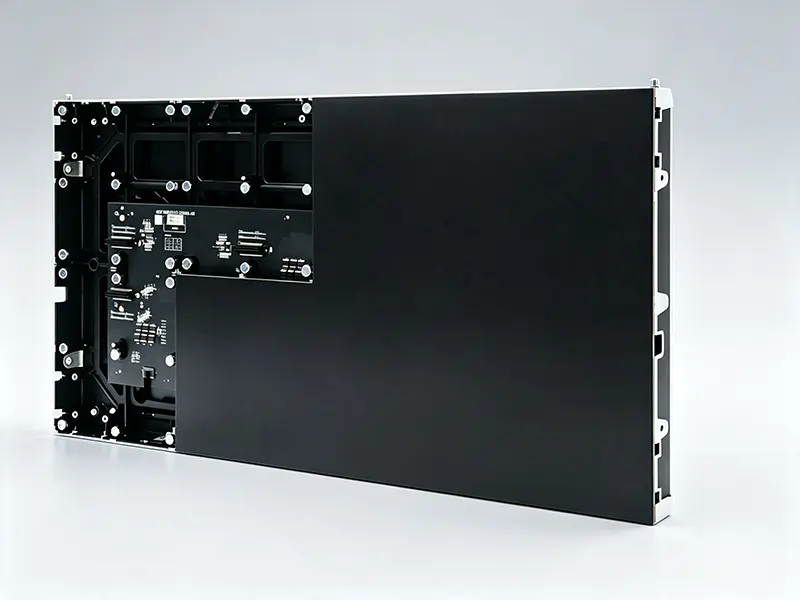
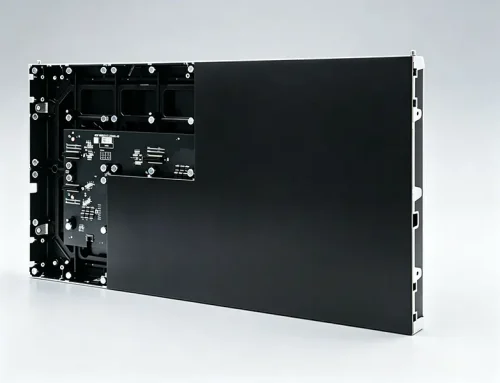
Unlike conventional SMD displays, COB technology mounts LED chips directly onto the PCB and encapsulates them as a unified surface. The result is a display that offers superior protection, exceptional contrast, and excellent performance for fine-pitch applications.
Today, COB is becoming the preferred solution for command centers, broadcast studios, corporate meeting rooms, luxury retail environments, and other premium indoor display applications.
In this guide, you’ll learn:
- What COB LED technology is
- How COB differs from SMD
- Manufacturing process
- Key advantages and limitations
- Typical applications
- Frequently asked questions
Contact Us to Discuss Your Project Today
What Is COB LED Technology?
COB stands for Chip-on-Board.
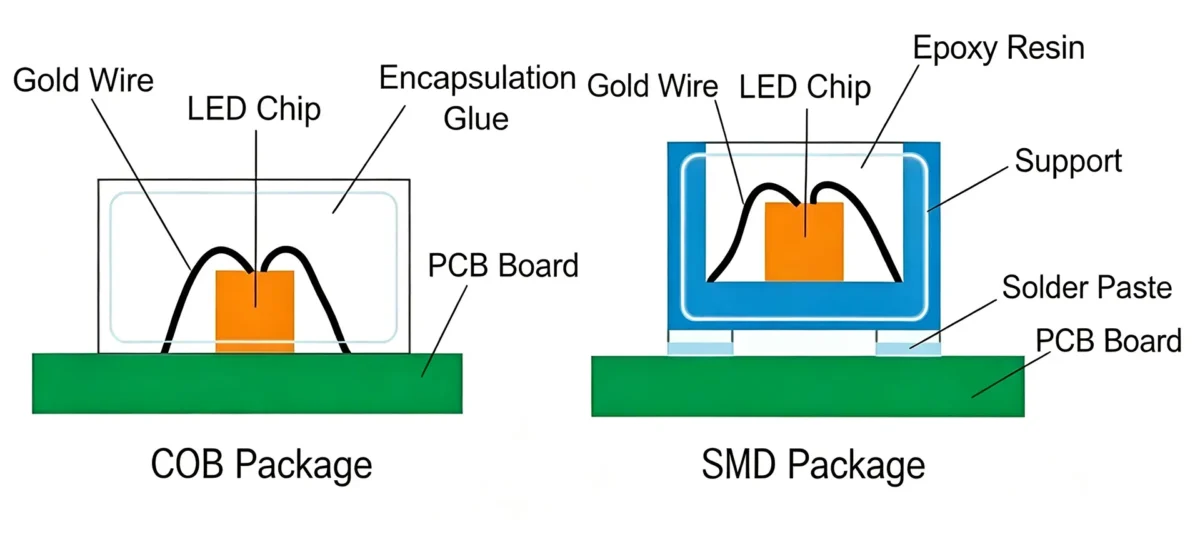
Instead of packaging RGB LED chips into individual SMD devices, COB technology mounts microscopic LED chips directly onto the PCB substrate.
The chips are then interconnected and protected through an encapsulation process
Traditional SMD Structure
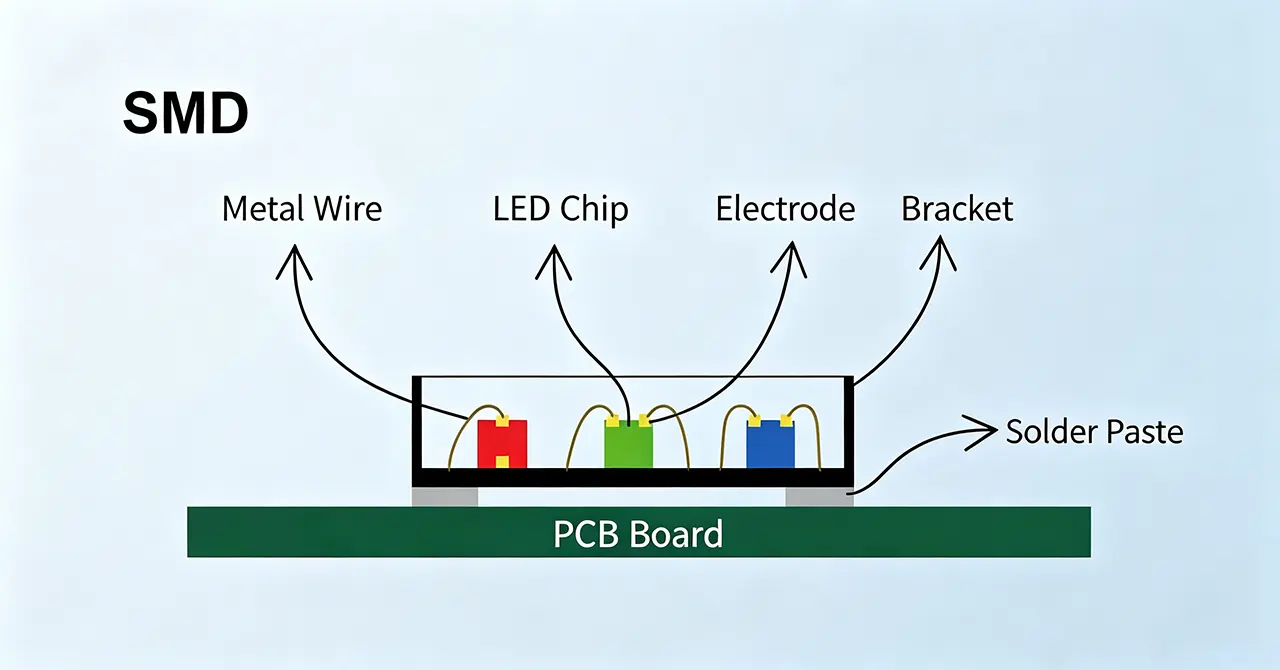
In SMD displays:
- RGB chips are packaged individually
- LED packages are mounted onto the PCB
- Each package remains visible on the surface
COB Structure
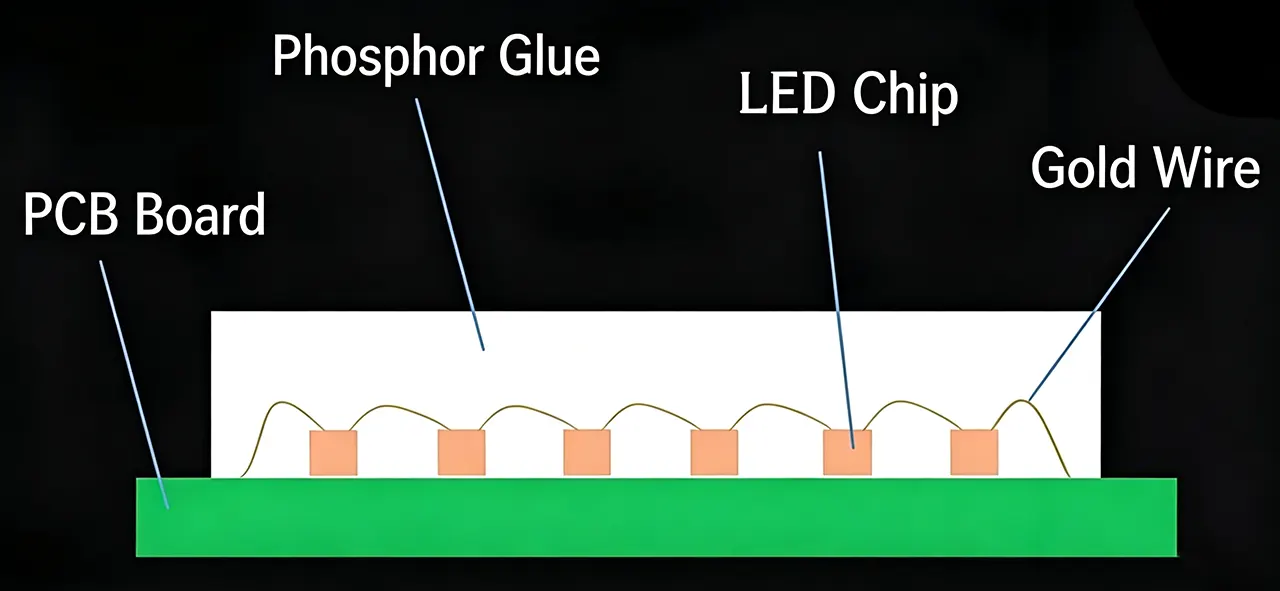
In COB displays:
- Bare LED chips are mounted directly on the PCB
- No individual SMD package exists
- Entire display surface is encapsulated
This creates a smoother and more durable display surface.
Why Was COB Technology Developed?
As pixel pitch decreases, traditional SMD packaging faces physical limitations.
| Pixel Pitch | Typical Technology |
|---|---|
| P2.5 – P1.8 | SMD |
| P1.5 – P1.2 | SMD / COB |
| P1.2 – P0.9 | COB Growing Rapidly |
| Below P0.9 | COB Dominant Trend |
Challenges facing ultra-fine-pitch SMD displays include:
- Smaller LED packages
- Reduced mechanical strength
- Higher repair rates
- Lower manufacturing yield
COB was developed to overcome these challenges.
How COB LED Displays Are Manufactured
Step 1: PCB Preparation
High-precision PCBs are manufactured with microscopic circuitry.
Step 2: Die Bonding
Bare RGB LED chips are directly mounted onto the PCB.
This process requires extremely high placement accuracy.
Step 3: Electrical Interconnection
The chips are electrically connected through advanced bonding technologies.
Step 4: Encapsulation
A protective optical layer is applied over the entire surface.
This layer provides:
● Impact resistance
● Moisture protection
● Optical optimization
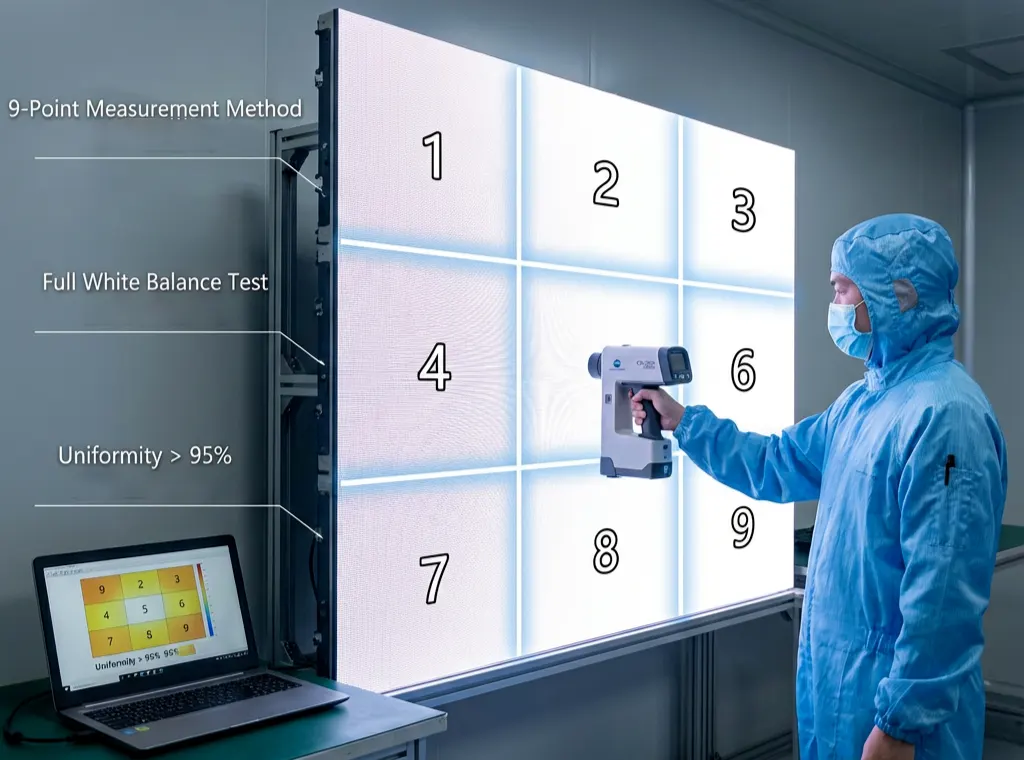
Step 5: Calibration and Testing
Manufacturers perform:
● Brightness calibration
● Color calibration
● Aging tests
● Reliability verification
Key Advantages of COB LED Technology
1. Exceptional Surface Protection
One of COB’s biggest strengths is durability.
The encapsulated surface protects against:
- Physical impact
- Dust
- Moisture
- Electrostatic discharge
Unlike exposed SMD packages, COB creates a highly robust display surface.
2. Ultra-High Contrast Ratio
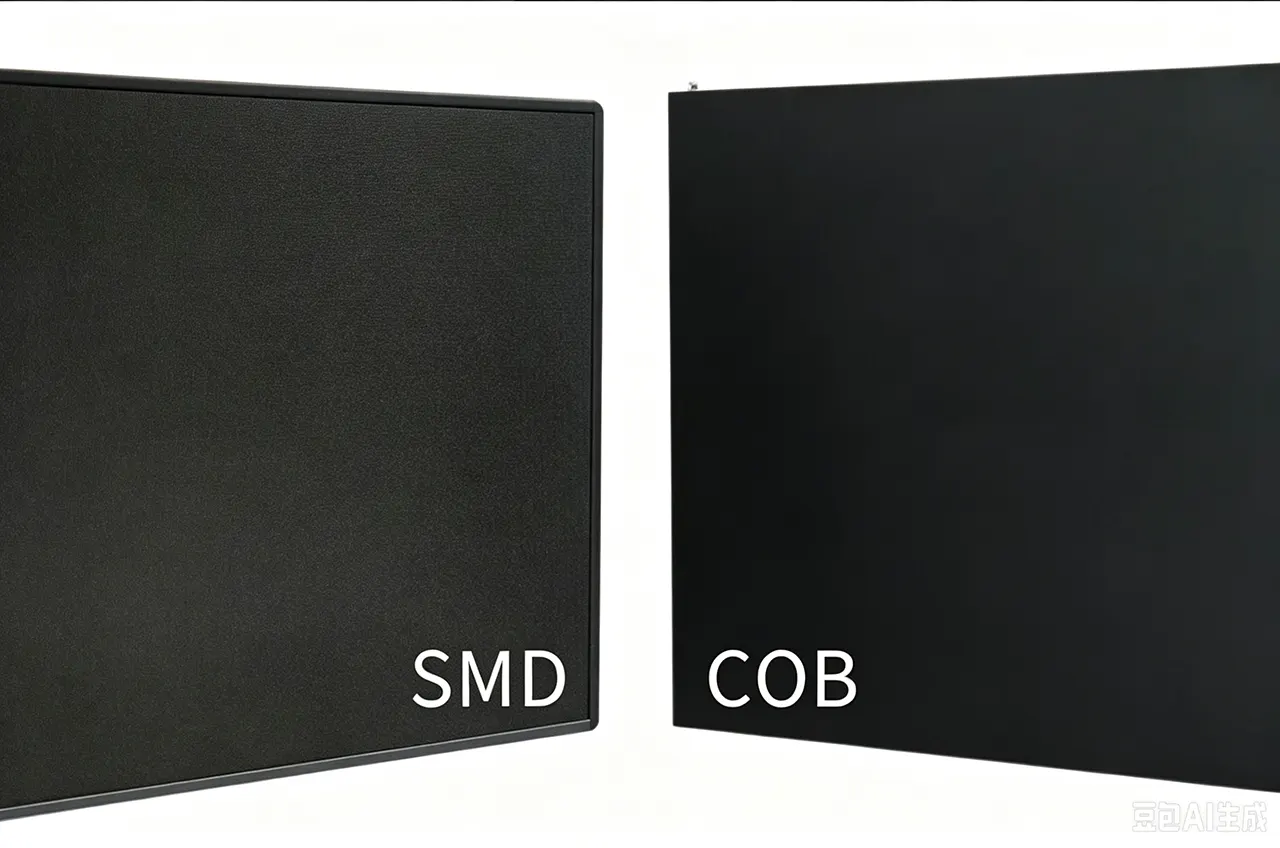
COB displays often achieve significantly higher contrast ratios because:
- Less ambient light reflection
- Darker display surface
- Better optical uniformity
Benefits include:
- Deeper blacks
- Better shadow details
- Enhanced HDR performance
This is particularly valuable in broadcast and control room environments.
3. Superior Fine-Pitch Capability
COB technology excels in ultra-fine-pitch applications.
Typical COB pixel pitches:
- P1.2
- P0.9
- P0.7
- P0.6
As pixel pitches continue shrinking, COB becomes increasingly advantageou
4. Improved Reliability
COB reduces several common failure modes:
- Dead pixels
- Package damage
- Moisture-related failures
- ESD damage
This contributes to lower maintenance requirements.
5. Better Heat Dissipation
Traditional SMD LEDs must dissipate heat through multiple layers.
COB structures allow heat to transfer more directly into the PCB.
Advantages:
- Lower operating temperatures
- Improved efficiency
- Longer lifespan
COB vs SMD
Technology Comparison
| Feature | SMD | COB |
|---|---|---|
| Packaging | Individual LED Packages | Direct Chip Mounting |
| Surface Protection | Moderate | Excellent |
| Contrast Ratio | High | Very High |
| Fine Pitch Capability | Good | Excellent |
| Maintenance | Easier | More Difficult |
| Production Cost | Lower | Higher |
| Technology Maturity | Very Mature | Rapidly Growing |
COB vs GOB
Many buyers confuse COB and GOB.
However, they are fundamentally different.
| Feature | GOB | COB |
|---|---|---|
| Base Technology | SMD | Direct Chip |
| Protection Layer | Added Resin | Integrated Encapsulation |
| Manufacturing Complexity | Medium | High |
| Cost | Medium | Higher |
| Fine-Pitch Performance | Good | Excellent |
| Long-Term Reliability | High | Very High |
Simple explanation:
GOB = Protected SMD
COB = New Packaging Technology
Typical Applications of COB LED Displays

Command Centers
High contrast and reliability make COB ideal for mission-critical monitoring.
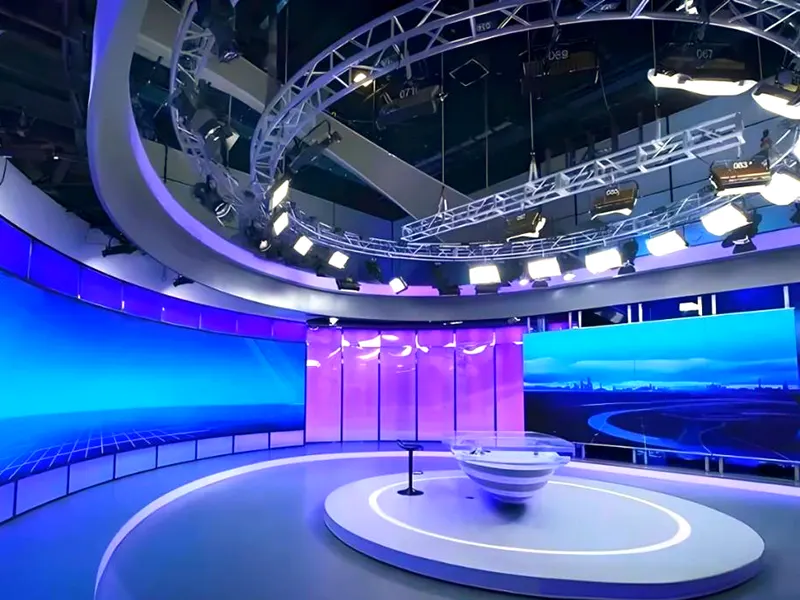
Broadcast Studios
Excellent black levels improve camera performance.
Corporate Meeting Rooms
Fine-pitch COB displays provide exceptional image clarity for presentations and video conferencing.
Luxury Retail
Premium visual quality enhances brand presentation.
Museums and Experience Centers
Durable surfaces withstand public interaction.
Are There Any Limitations to COB?
While COB offers significant advantages, buyers should understand its limitations.
Higher Initial Cost
COB manufacturing remains more expensive than traditional SMD production.
More Complex Repairs
Repairing individual chip failures can be more challenging.
Supply Chain Differences
Not all manufacturers have mature COB production capabilities.
Choosing an experienced supplier is critical.
Why Is COB Becoming More Popular?
Several industry trends are accelerating COB adoption:
Demand for Smaller Pixel Pitches
As pixel pitches move below P1.2, COB becomes increasingly competitive.
Higher Expectations for Reliability
Users expect longer service life and lower maintenance.
Growth of HDR Content
COB’s superior contrast ratio enhances HDR performance.
Falling Manufacturing Costs
As production scales increase, COB costs continue to decline.
Frequently Asked Questions
1. What does COB stand for?
COB stands for Chip-on-Board, a technology that mounts LED chips directly onto the PCB.
2. Is COB better than SMD?
For ultra-fine-pitch and premium indoor applications, COB often offers advantages in protection, contrast, and reliability. For many standard applications, SMD remains an excellent choice.
3. Is COB suitable for outdoor displays?
COB is currently most common in indoor fine-pitch applications, although outdoor COB products are becoming available.
4. Does COB have better image quality?
COB often delivers higher contrast, deeper blacks, and improved HDR performance, especially in controlled indoor environments.
5. Why is COB more expensive?
COB requires advanced manufacturing processes, tighter tolerances, and specialized equipment.
Looking for the Right COB LED Display?
Whether you’re planning a control room video wall, a premium conference room display, or a fine-pitch commercial installation, We can help you select the ideal COB LED solution for your project.
Contact our team today for expert advice, technical consultation, and customized LED display solutions.
What Is COB LED Technology?
A Complete Guide to Chip-on-Board LED Displays
Introduction
As demand for ultra-high-definition LED displays continues to grow, traditional packaging technologies face increasing challenges. Smaller pixel pitches require greater durability, higher contrast ratios, better heat dissipation, and improved manufacturing precision.
This has driven the rapid adoption of COB (Chip-on-Board) LED technology.
Unlike conventional SMD displays, COB technology mounts LED chips directly onto the PCB and encapsulates them as a unified surface. The result is a display that offers superior protection, exceptional contrast, and excellent performance for fine-pitch applications.
Today, COB is becoming the preferred solution for command centers, broadcast studios, corporate meeting rooms, luxury retail environments, and other premium indoor display applications.
In this guide, you’ll learn:
- What COB LED technology is
- How COB differs from SMD
- Manufacturing process
- Key advantages and limitations
- Typical applications
- Frequently asked questions
Contact Us to Discuss Your Project Today
What Is COB LED Technology?
COB stands for Chip-on-Board.
Instead of packaging RGB LED chips into individual SMD devices, COB technology mounts microscopic LED chips directly onto the PCB substrate.
The chips are then interconnected and protected through an encapsulation process
Traditional SMD Structure
In SMD displays:
- RGB chips are packaged individually
- LED packages are mounted onto the PCB
- Each package remains visible on the surface
COB Structure
In COB displays:
- Bare LED chips are mounted directly on the PCB
- No individual SMD package exists
- Entire display surface is encapsulated
This creates a smoother and more durable display surface.
Why Was COB Technology Developed?
As pixel pitch decreases, traditional SMD packaging faces physical limitations.
| Pixel Pitch | Typical Technology |
|---|---|
| P2.5 – P1.8 | SMD |
| P1.5 – P1.2 | SMD / COB |
| P1.2 – P0.9 | COB Growing Rapidly |
| Below P0.9 | COB Dominant Trend |
Challenges facing ultra-fine-pitch SMD displays include:
- Smaller LED packages
- Reduced mechanical strength
- Higher repair rates
- Lower manufacturing yield
COB was developed to overcome these challenges.
How COB LED Displays Are Manufactured
Step 1: PCB Preparation
High-precision PCBs are manufactured with microscopic circuitry.
Step 2: Die Bonding
Bare RGB LED chips are directly mounted onto the PCB.
This process requires extremely high placement accuracy.
Step 3: Electrical Interconnection
The chips are electrically connected through advanced bonding technologies.
Step 4: Encapsulation
A protective optical layer is applied over the entire surface.
This layer provides:
● Impact resistance
● Moisture protection
● Optical optimization
Step 5: Calibration and Testing
Manufacturers perform:
● Brightness calibration
● Color calibration
● Aging tests
● Reliability verification
Key Advantages of COB LED Technology
1. Exceptional Surface Protection
One of COB’s biggest strengths is durability.
The encapsulated surface protects against:
- Physical impact
- Dust
- Moisture
- Electrostatic discharge
Unlike exposed SMD packages, COB creates a highly robust display surface.
2. Ultra-High Contrast Ratio
COB displays often achieve significantly higher contrast ratios because:
- Less ambient light reflection
- Darker display surface
- Better optical uniformity
Benefits include:
- Deeper blacks
- Better shadow details
- Enhanced HDR performance
This is particularly valuable in broadcast and control room environments.
3. Superior Fine-Pitch Capability
COB technology excels in ultra-fine-pitch applications.
Typical COB pixel pitches:
- P1.2
- P0.9
- P0.7
- P0.6
As pixel pitches continue shrinking, COB becomes increasingly advantageou
4. Improved Reliability
COB reduces several common failure modes:
- Dead pixels
- Package damage
- Moisture-related failures
- ESD damage
This contributes to lower maintenance requirements.
5. Better Heat Dissipation
Traditional SMD LEDs must dissipate heat through multiple layers.
COB structures allow heat to transfer more directly into the PCB.
Advantages:
- Lower operating temperatures
- Improved efficiency
- Longer lifespan
COB vs SMD
Technology Comparison
| Feature | SMD | COB |
|---|---|---|
| Packaging | Individual LED Packages | Direct Chip Mounting |
| Surface Protection | Moderate | Excellent |
| Contrast Ratio | High | Very High |
| Fine Pitch Capability | Good | Excellent |
| Maintenance | Easier | More Difficult |
| Production Cost | Lower | Higher |
| Technology Maturity | Very Mature | Rapidly Growing |
COB vs GOB
Many buyers confuse COB and GOB.
However, they are fundamentally different.
| Feature | GOB | COB |
|---|---|---|
| Base Technology | SMD | Direct Chip |
| Protection Layer | Added Resin | Integrated Encapsulation |
| Manufacturing Complexity | Medium | High |
| Cost | Medium | Higher |
| Fine-Pitch Performance | Good | Excellent |
| Long-Term Reliability | High | Very High |
Simple explanation:
GOB = Protected SMD
COB = New Packaging Technology
Typical Applications of COB LED Displays
Command Centers
High contrast and reliability make COB ideal for mission-critical monitoring.
Broadcast Studios
Excellent black levels improve camera performance.
Corporate Meeting Rooms
Fine-pitch COB displays provide exceptional image clarity for presentations and video conferencing.
Luxury Retail
Premium visual quality enhances brand presentation.
Museums and Experience Centers
Durable surfaces withstand public interaction.
Are There Any Limitations to COB?
While COB offers significant advantages, buyers should understand its limitations.
Higher Initial Cost
COB manufacturing remains more expensive than traditional SMD production.
More Complex Repairs
Repairing individual chip failures can be more challenging.
Supply Chain Differences
Not all manufacturers have mature COB production capabilities.
Choosing an experienced supplier is critical.
Why Is COB Becoming More Popular?
Several industry trends are accelerating COB adoption:
Demand for Smaller Pixel Pitches
As pixel pitches move below P1.2, COB becomes increasingly competitive.
Higher Expectations for Reliability
Users expect longer service life and lower maintenance.
Growth of HDR Content
COB’s superior contrast ratio enhances HDR performance.
Falling Manufacturing Costs
As production scales increase, COB costs continue to decline.
Frequently Asked Questions
1. What does COB stand for?
COB stands for Chip-on-Board, a technology that mounts LED chips directly onto the PCB.
2. Is COB better than SMD?
For ultra-fine-pitch and premium indoor applications, COB often offers advantages in protection, contrast, and reliability. For many standard applications, SMD remains an excellent choice.
3. Is COB suitable for outdoor displays?
COB is currently most common in indoor fine-pitch applications, although outdoor COB products are becoming available.
4. Does COB have better image quality?
COB often delivers higher contrast, deeper blacks, and improved HDR performance, especially in controlled indoor environments.
5. Why is COB more expensive?
COB requires advanced manufacturing processes, tighter tolerances, and specialized equipment.
Looking for the Right COB LED Display?
Whether you’re planning a control room video wall, a premium conference room display, or a fine-pitch commercial installation, We can help you select the ideal COB LED solution for your project.
Contact our team today for expert advice, technical consultation, and customized LED display solutions.



 +86 19075683597
 Shenzhen, China